
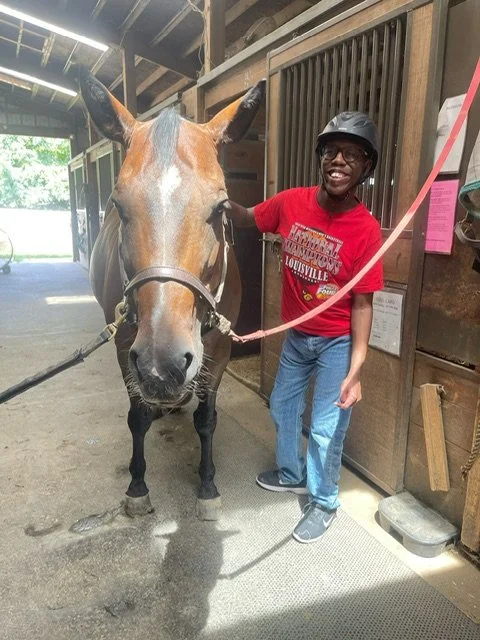
What are Equine Assisted Services?
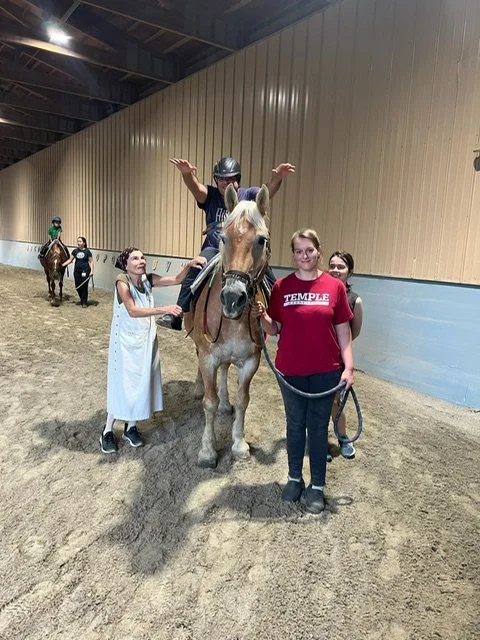
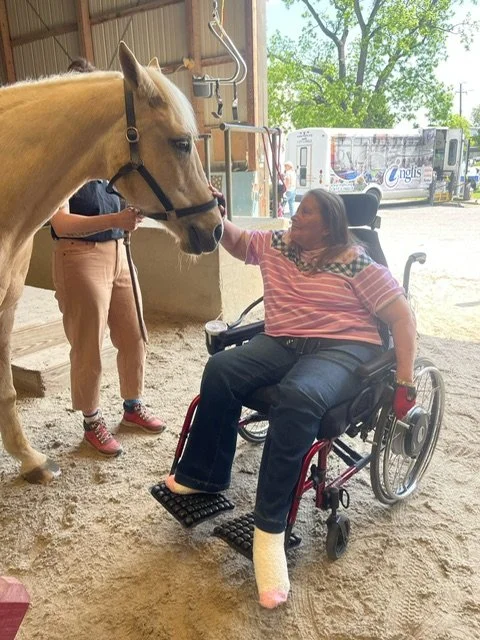
Therapeutic riding is a unique form of therapy, using the three dimensional movement of the horse to stretch and strengthen riders’ muscles, move their joints, and improve balance and coordination for walking. The movement of the horse mimics the human gait by being rhythmic, repeatable, and three-dimensional — all movements needed to simulate normal walking patterns. It so closely resembles our human gait that it helps physically challenged children discover the rhythm needed to initiate their own independent steps. Being astride a horse not only helps establish walking, it can also improve the quality of walking. Where walking is not a realistic goal, the horse’s steady movement stimulates the brain and neurological system, along with the hips and legs, preventing atrophy of walking muscles.
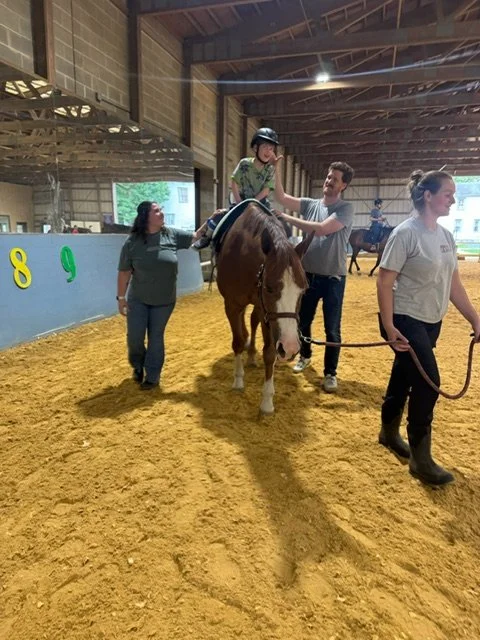
The benefits of riding are not exclusively physical, nor are they limited to clients with physical disabilities. With more children being diagnosed with autism every day, equine-assisted activities and therapies have come to the forefront as a progressive treatment. Many in the medical community believe there is a special connection between horses and children with autism because both interpret the world pictorally. The things that horses observe are the same things that children see and react to, making them more in sync with each other. As this bond grows, progress such as eye contact, facial recognition, and interaction become possible with many riders.
Pegasus has been a “god send” for my son Tommy, who is non-verbal and not ambulatory. It’s amazing what the program has done for him. He’s better with adapting to change, is able to express his likes and dislikes and it has been a huge boost to his confidence.
– Mary Anne, mother of a Pegasus rider
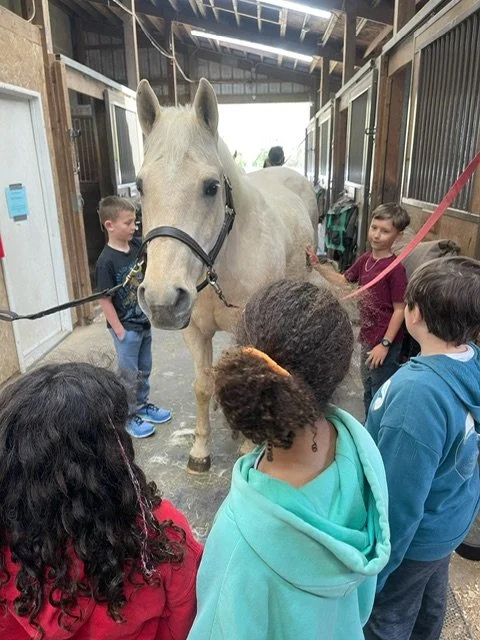
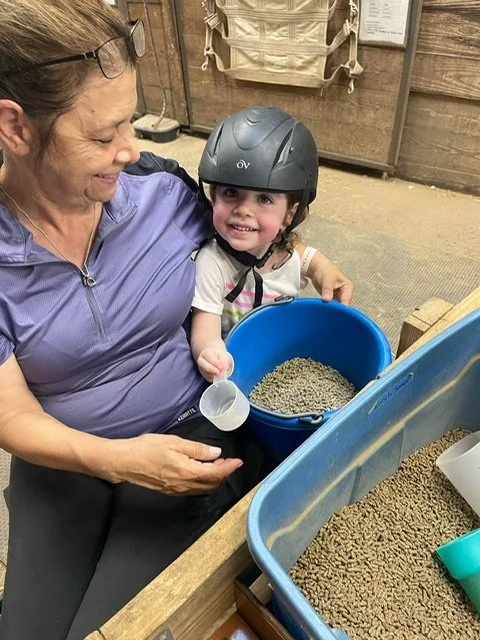
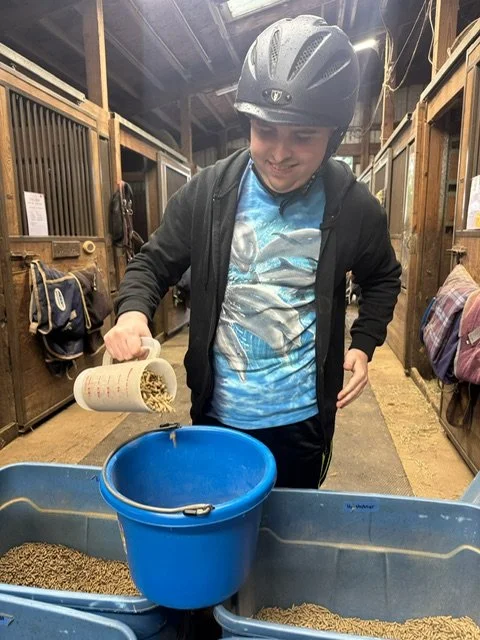
Riding therapy has been found to be dramatically effective with mentally and emotionally challenged individuals by improving their socialization, personal development, and self-esteem. Such improvements often grow out of a rider building trust with the instructor and building a relationship with the horse. Participation in routine grooming and tacking of the horse and competitive events, such as the Handicapped Riders Division of the Devon Horse Show, gives our riders the opportunity to develop self-discipline and a sense of accomplishment. Clients take an active role in their own therapy, often reaching goals more quickly because of their increased motivation and commitment.
Frequently Asked Questions
-
Therapeutic Riding includes any mounted equine activity taught by a PATH International Certified Instructor with assistance from trained volunteers. Generally, students are individuals with disabilities or diverse needs. They may learn traditional riding disciplines or participate in adaptive riding activities designed to accommodate their specific challenges.PATH is the Professional Association of Therapeutic Horsemanship. It is an international organization that governs and sets the standards within the industry for equine assisted activities and therapy. For more information, you can visit PATH’s website at www.pathintl.org.
-
Pegasus is dedicated to addressing the needs of individuals with physical, developmental, intellectual, and behavioral challenges. Therapeutic riding lessons can be adapted to teach riding skills to a wide variety of participants while accommodating their individual needs. In evaluating whether therapeutic riding is appropriate for an individual, safety (of both riders and horses) is our primary concern. A physician’s release is required before someone may even be considered for participation in the program. All prospective participants must be evaluated by program staff prior to entry in the program. There is a $50 non-refundable fee for the evaluation.
-
The benefits of therapeutic riding include:
Improved balance, flexibility, strength, muscle control and eye-hand coordination
Greater self-confidence, independence, patience, emotional control, self-discipline and problem solving skills
Development of friendships, teamwork skills, mutual respect and a sense of responsibility
Fun, relaxation and a general sense of well-being
-
If your student has been found eligible to receive compensatory education (hours) through the School District of Philadelphia; the amount, duration, and extent in which you may utilize compensatory hours will be outlined in your individual settlement agreement.
Pegasus TRA is an approved provider with the Philadelphia School District.
Download our registration packet here to get started.
-
We serve riders with many different types of disabilities. For example, some of our riders have the following disabilities:
ADHD – Inattentive type, Hyperactive – Impulsive type, Combination type
Autism
Cerebral Palsy
Developmental Delay or Disability
Down Syndrome
Emotional, Behavioral, or Mental Health Conditions
Executive Functioning Issues
Genetic Conditions/Disorders
Head Trauma/Brain Injury
Hearing Impairment
Learning Disability
Intellectual Disability
Multiple Sclerosis
Muscular Dystrophy
Orthopedic Conditions
Paralysis
Prader-Willi Syndrome
Speech Impairment
Spina Bifida
Spinal Cord Injury
Stroke
Terminal Illness
Visual Impairment
-
Riders must be at least 2 years old. Weight limits for riders are imposed for the safety of the horses. The weight limit at Pegasus is 200 lbs. including tack.
-
No. Pegasus only works with riders who have a disability. Unfortunately, our schedule does not have room even for siblings who do not have disabilities. The one exception is our “Back in the Tack” lesson program, which is designed for able-bodied men and women over the age of 18 and does not require its participants to have a disability.
-
Pegasus provides group therapeutic riding lessons, a specialized autism program, an unmounted equine facilitated learning program, a Senior Saddles program for riders age 55 and older, and a six-week “try me” summer program. Please go to Our Programs page for more details.
-
Group therapeutic riding lessons are provided on:
Tuesday, Wednesday, and Thursday evenings (6:00 – 8:00 PM)
Wednesday and Thursday mornings
Saturday and Sunday mornings and afternoons
The Autism Program is offered on Monday evenings (6:00 – 8:00 PM).
“Back in the Tack” lessons are offered on Tuesday mornings.
-
There are four riders in each group lesson. Participants in group lessons learn riding and horsemanship skills. They also play games, work on educational and social skills, and take trail rides on the Pegasus property. Riders will also participate in unmounted activities with our horses in order to gain a better appreciation of our four-legged friends as well as build a stronger bond with the horse they ride.
-
Group Lessons are 30 minutes long. Participants ride once a week in the same lesson time. Riders must participate for the minimum of a session. There are opportunities for additional private lessons.
-
No. Because no therapist is involved in the lessons, they are not covered by most insurance companies.
-
A physician’s release is required before someone may even be considered for participation in the program. All prospective participants must be evaluated by program staff prior to entry in the program. There is a $50 non-refundable fee for the evaluation.
Once the evaluation has been conducted and our office has received the completed Registration and Medical Forms, the prospective participant’s name will be placed on the waiting list. You will be called when there is an opening and your name is next on the list. If you are unable to take the opening, your name will remain where it is on the waiting list and we will contact the next person. When the next opening occurs, we will contact you again. We do not call people on the waiting list periodically to let them know how they are progressing. However, please feel free to check in with us!
-
It is difficult to estimate how long a prospective participant will have to be on the waiting list because openings depend on other riders leaving the program. But as soon as open lesson slots come up, we work quickly to fill them with individuals on our waiting list!
-
The Autism Program is by invitation only to riders who are already participating in the therapeutic riding program and would be appropriate for one of the three classes in the Autism Program. Openings in the Autism Program are dependent on riders leaving the program.